· 9 min read
Hotel Lead Generation: A Simple Guide for Independent Hotels
Learn how hotel lead generation works, how to find group sales leads, and how to follow up fast so more guests book direct with your hotel.
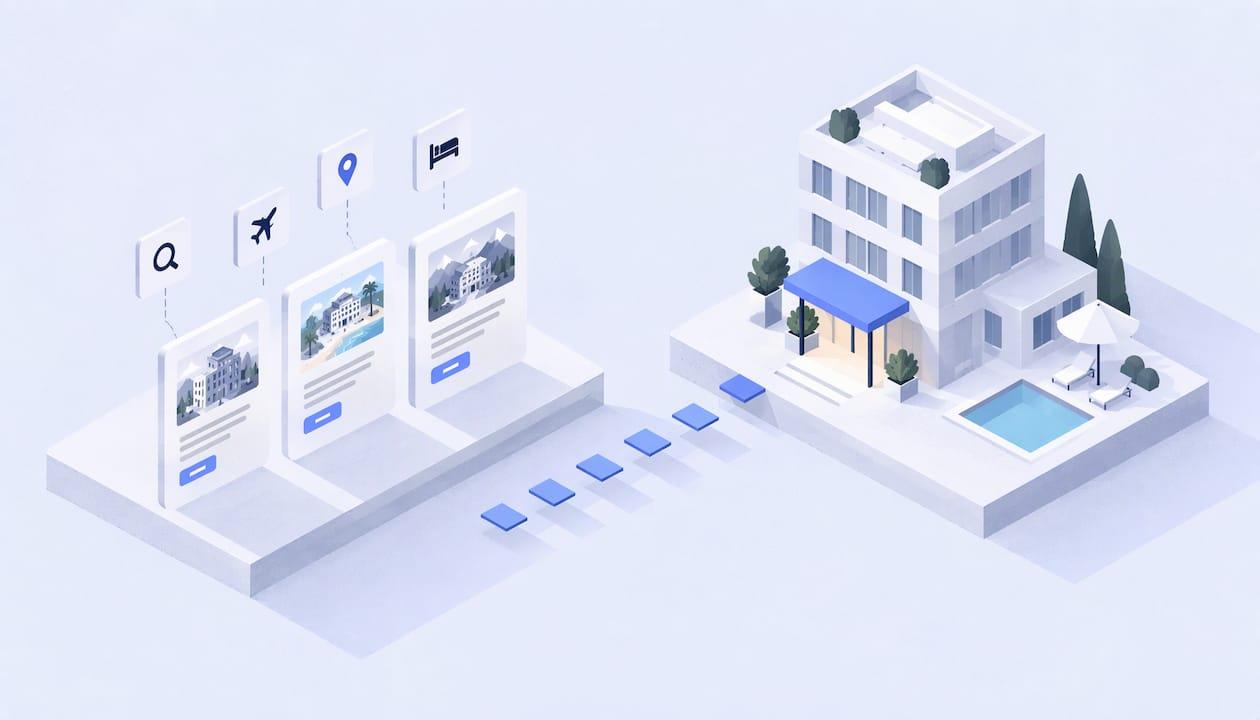
Hotel lead generation means finding people who may book your rooms, then helping them say yes. Some leads are single guests. Others are groups, like wedding parties, teams, and event planners. Win both kinds the same way: be easy to find, be quick to answer, and keep in touch until they book.
This guide shows you how to do that at an independent hotel. You do not need a big team. You need a few good habits and a plan you can follow every week.
Free with every demo
Get a website guests and AI both recommend.
- See your new AI-visible website on the call
- Social content made and posted for you
- The website is yours to keep, free
Key Takeaways
- A lead is a person who shows interest in staying with you. A booking or signed contract is what a good lead becomes later.
- Single guests and groups need different plans. Guests decide fast. Groups take longer and need a real person to talk to.
- Speed wins group business. Answer every request the same day if you can.
- Your website, Google profile, and social posts all feed your lead list. Fix them first.
- Texting leads has U.S. rules. Get written consent before you send promo texts.
What hotel lead generation means
A lead is a name, an email, and a sign that the person might book. That is how one industry guide puts it. A lead is not a sale yet. Some leads book in days. Some never book.
Hotel lead generation is the work of finding, attracting, and warming up those people. Industry writers say the targets include solo travelers, company groups, wedding planners, and event organizers.
Think of a lead as a guest knocking on your door. Your job is to open it fast and be friendly.
Two kinds of leads: guests and groups
Most hotels have two jobs in lead generation. One guide splits them like this. Single travelers have a short path and the goal is a room booked. Planners, companies, and wedding clients have a long path and the goal is a good event request.
Here is a plain look at the difference.
| Single guests | Groups and events | |
|---|---|---|
| Who decides | The traveler | A planner, a boss, or a committee |
| How long it takes | Minutes to days | Weeks to months |
| Best first step | A clear website and easy booking | A real person who answers fast |
| What you want | A direct booking | A signed contract |
| Where leads come from | Google, social posts, your site | Referrals, local firms, planners, outreach |
Another guide lists common segments: corporate accounts, groups and meetings, and weddings. Each one needs its own details. For a group, you want the dates, the number of people, the room nights, and the space they need.
How to get more direct guest leads
Single guests start on Google. They look at a map, a few photos, and some reviews. Then they pick. Your goal is to look good at each step and make booking on your own site simple.

Fix your Google Business Profile
This free listing is often the first thing a traveler sees. Check these things:
- Your name, address, and phone number are right.
- Your photos are new and bright.
- Your hours and answers to common questions are filled in.
- Your booking link goes to your own site.
- You answer every review, good or bad, in a kind voice.
This is a small job that pays off. We cover it in our online presence repair service.
Make your website do the work
Your site should answer three questions in a few seconds. Where are you? What does a night cost? How do I book? Put a booking button at the top of each page. Use big photos. Make sure it loads fast on a phone.
Add pages for the guests you want. A page for couples. A page for families. A page for crews working nearby. Each page gives that guest a reason to pick you.
Show up in AI answers too
More travelers now ask AI tools where to stay. Those tools read your site and your listings. If your facts are clear and match everywhere, you are easier to recommend. This is called generative engine optimization, or GEO. Answer engine optimization, or AEO, is the same idea for short answers. Read how our AI visibility work is set up.
Post things local people care about
Social posts bring leads when they feel local. Share the farmers market, the football game, the concert, the festival. Show your rooms and your staff. Show real guests when they say yes to it. Our guide to hotel social media marketing gives you a plan you can follow, and our independent hotel marketing playbook shows how posts, search, and your site fit together.
How to find group sales leads
Group business is big money. It fills many rooms at once. It also takes work, because groups do not just show up. You have to find them.
Use event platforms, but do not stop there
Planners often search large event sites. One report says nearly 340,000 hotels and venues are listed on one big network, and planners found over $16 billion in group business there in 2023. That shows planners look online first.
But you should not rely only on those sites. One hotel sales guide says to use them and also build real ties with event planners and local groups.
Reach out to local companies
For company business, the same guide says to reach out yourself. It points to LinkedIn, local business journals, and chamber of commerce lists. Here is a simple weekly routine:
- Pick five local companies that bring in visitors, like trainers, vendors, or clients.
- Find the person who plans travel or events.
- Send a short, friendly note. Say who you are and one way you can help.
- Follow up in a week.
- Write down every reply in one list.
Keep the note short. Use plain words. Offer one thing, like a group rate or a free room tour.
Build ties with planners and local groups
Wedding planners, event designers, sports clubs, and churches all send people to hotels. Meet them. Invite them to see your rooms and your event space. Send a thank-you when they send you a lead. A practical guide to corporate event design can help you see what planners care about when they pick a venue and a room block.
Look at crews and project teams
Another steady source is work crews. Builders, road teams, and utility crews need rooms for weeks or months. They book in blocks and often stay a long time. We are building a service for this, called construction crew prospecting. It is aimed at finding these teams and reaching out for you.
Capture and keep every lead
A lead you forget is a lead you lose. Use one place to keep them all. A shared sheet works. A simple CRM works better as you grow. A CRM guide suggests giving corporate asks, wedding asks, and group requests to people who can answer them.
For each lead, write down:
- Name and contact info
- Company or event type
- Dates and number of guests
- Where the lead came from
- The next step and the date you will do it
A simple follow-up plan
| When | What to do |
|---|---|
| Same day | Reply with a clear price and a next step |
| Day 3 | Send a short note with photos of rooms or space |
| Day 7 | Call and ask if they have any questions |
| Day 14 | Send a final check-in with a deadline for the held dates |
| After the stay | Ask for a review and a referral |
Speed is the secret
Speed matters most with groups. A hotel group reported that an AI email helper cut its average reply time on group requests from about 2 hours 55 minutes to about 1 hour 37 minutes. The same report says same-day proposals turn into bookings 25 to 27 percent of the time.
You do not need a big company to be fast. Pick one person to watch your inbox. Write a short reply template for common requests. Check each day, even on weekends.

Rules for texts and calls in the U.S.
Texting can help you follow up. It also has rules. Break them and it can cost you.
- Under the TCPA, you need written consent first before sending automated promo texts to a mobile number. Fines can reach $1,500 per violation.
- Every text must give a way to opt out. Honor each opt-out right away.
- Since April 11, 2025, people can revoke consent in any reasonable way. You must honor it as soon as possible, and no later than 10 business days after the request.
- The same source says businesses must keep consent records for at least five years under the Telemarketing Sales Rule.
A simple safe step: add a clear checkbox on your forms that asks for text consent, and save a record of every yes. If you are unsure about your forms or your texting tools, ask a lawyer who knows telemarketing law.
What to measure
You cannot fix what you do not count. Track a few numbers each month:
- New leads: how many people asked for a room or a quote
- Lead source: where each one came from
- Reply time: how fast you answered
- Booking rate: how many leads became bookings
- Direct share: how many bookings came to your own site or phone instead of an online travel agency
If leads are high but bookings are low, look at your reply time and your price. If leads are low, look at your Google profile and your site. Change one thing at a time so you know what worked.
Our point of view
Most independent hotels do not have a sales team. They have a busy front desk and an owner who wears ten hats. That is why leads slip away. Nobody has time to reply fast, post each week, and call local companies.
We built HotelHero for that gap. We believe a hotel needs three things working together: a site and profile that people and AI tools can read, steady local content that earns attention, and a real person who reaches out for group business. Each one helps the others.
Our goal is to help you book more rooms without paying a big commission each time. We aim to launch your plan in 30 days, so you start to see results sooner. We know hotels, and we build every plan for independent properties, not big chains.
Start with the basics in this guide. Then let us take the heavy parts off your plate.
Chirag
How HotelHero can help
If you want a team to handle this, we can. Our Direct Booking System brings together remote group sales, social media, and a cleaner online presence. We also run social media and UGC work so your posts show real guests and local events. To talk about your hotel, reach out here.
Want more ideas first? Read our list of ways to increase hotel bookings or our simple plan for boutique hotel marketing.
FAQ
What is hotel lead generation?
It is the work of finding people who might book your hotel and moving them toward a yes. Leads can be single guests, company teams, wedding planners, or event groups. The lead is the first sign of interest. The booking comes later.
How do I get hotel group sales leads?
Use event planning sites, but also reach out to local companies, planners, clubs, and work crews. Look at LinkedIn, local business journals, and chamber lists. Reply fast, because quick proposals win more deals.
What is the difference between a lead and a booking?
A lead is a person who shows interest, like a form fill or a call. A booking is a paid reservation or a signed contract. Many leads never turn into bookings, so follow-up matters.
Can I text my hotel leads?
Yes, but you need the right consent first. For automated promo texts, U.S. rules require written consent and an easy way to opt out. Ask a lawyer to check your forms if you are not sure.
How fast should I answer a lead?
As fast as you can, ideally the same day. One report links same-day group proposals to higher win rates. Choose one person to own the inbox so nothing waits.
Sources
- What Is Hotel Lead Generation? A Complete Industry Guide
- Hotel Lead Generation Ads | Direct Bookings & Events
- Lead Generation for Hotels: Tips to Fill More Rooms
- Hotel Lead Generation: 12 Strategies to Fill Your Pipeline
- Hotel Sales Playbook for Repeat Business Growth
- The AI revolution: boosting meeting and group revenue
- USA SMS compliance and best practice
- What you can and can’t do under the TCPA
- Corporate Event Design: A Practical Guide for Planners